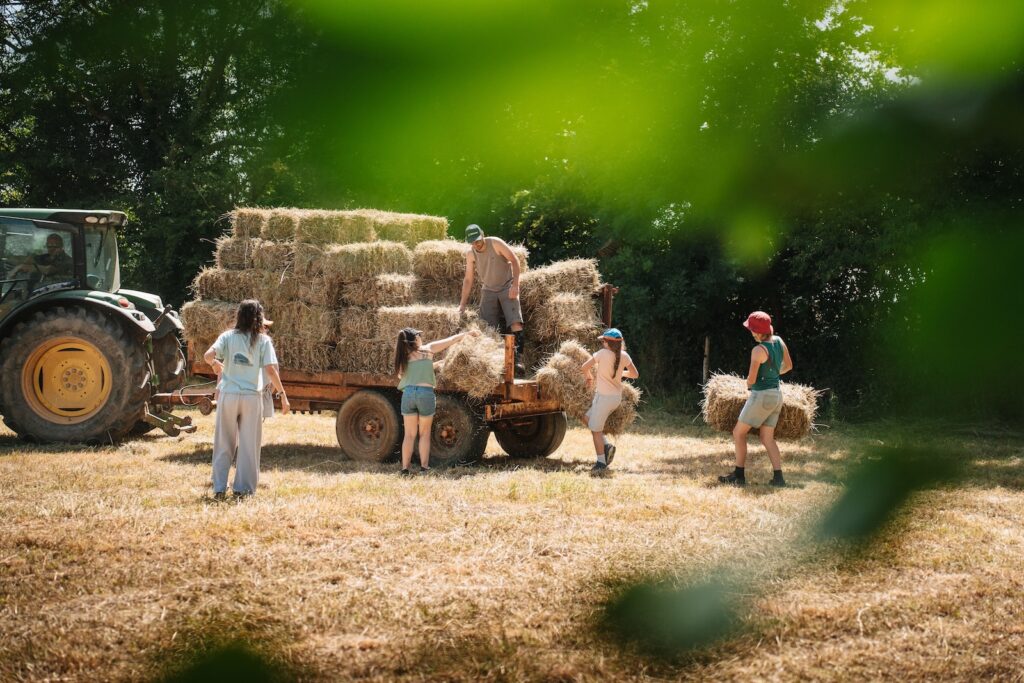
Farming solicitors handle the transactions, agreements, disputes and succession arrangements that are specific to agricultural land and rural business.
That covers the sale and purchase of farms, agricultural tenancies, partnership agreements, diversification projects, environmental and regulatory compliance, and the transfer of a farming business to the next generation.
The Department for Environment, Food and Rural Affairs recorded 101,890 commercial holdings in England at 1 June 2025, farming 8.8 million hectares, which is 68 per cent of the country.
Very few of those businesses fit a standard commercial template. Our agricultural and rural property solicitors work across the whole of a farming client’s legal position rather than one transaction at a time.
Buying and selling farms and agricultural land
Farm sales and purchases carry issues that rarely arise in ordinary conveyancing. Sporting rights, private water supplies, abstraction licences, wayleaves for cables, pylons and pipelines, manorial rights and unregistered title all need to be identified before exchange, not after.
Our farm solicitors deal routinely with holdover arrangements allowing a seller access after completion where growing crops are excluded from the sale, early access rights for buyers who need to drill before completion, the apportionment of wayleave payments, the release of agricultural charges, and the transfer of entitlements and agri-environment scheme obligations.
Sales including livestock, machinery or a milk contract require separate treatment from the land itself. Where a transaction sits closer to commercial development than agriculture, our commercial property solicitors advise alongside the rural team.
Agricultural tenancies and farm business tenancies
Agricultural tenancy law split on 1 September 1995. The Agricultural Holdings Act 1986 governs tenancies granted before that date and usually confers lifetime security of tenure, with rent reviewable every three years and a notice to quit generally requiring at least twelve months.
The Agricultural Tenancies Act 1995 governs farm business tenancies granted afterwards, which carry no equivalent statutory security and no succession rights.
That distinction decides the value of a holding. Defra figures for 2024 put rented land at 32 per cent of England’s farmed area, and farm business tenancies now account for around 1.3 million hectares of it.
Succession under the 1986 Act changed materially on 1 September 2024. Schedule 3 to the Agriculture Act 2020 abolished the commercial unit test and replaced it with a suitability test under regulations made in 2021, which assesses a successor’s experience, training, skills and financial standing against the need to farm the holding commercially and to a high environmental standard.
The retirement trigger moved from age 65 to pensionable age.
An application following a tenant’s death must be made within three months. Disputed applications in England are decided by the First-tier Tribunal (Property Chamber), Agricultural Land and Drainage.
We also advise on grazing licences, contract farming agreements and share farming arrangements, and on landlord and tenant disputes where terms break down.
Farming partnerships and business structures
The partnership remains the most common structure for a farming business, and the most commonly undocumented. Without a written agreement, a farming partnership is governed by the Partnership Act 1890, which dissolves the partnership on the death or retirement of a partner and shares profits equally regardless of contribution.
Those default rules produce outcomes almost no farming family would choose.
A properly drafted partnership agreement records whether land is a partnership asset or held outside it, fixes capital and current account entitlements, sets out what happens on death, retirement or incapacity, and protects the tax treatment of the land.
Where a limited company or a joint venture suits the business better, our corporate law solicitors advise on structure and shareholder arrangements.
Succession planning and inheritance tax from April 2026
Agricultural property relief and business property relief changed on 6 April 2026. A combined allowance of £2.5 million now applies to the value of property in an estate qualifying for 100 per cent agricultural property relief or 100 per cent business property relief, with relief at 50 per cent on qualifying value above that figure.
According to the policy paper on the agricultural property relief and business property relief changes published by HM Revenue and Customs, any unused allowance transfers to a surviving spouse or civil partner, and the option to pay inheritance tax by equal annual instalments over ten years, interest free, extends to all property eligible for either relief.
The practical effect is that farming families who assumed an estate would pass free of inheritance tax need to check that assumption. Ownership structure, the terms of the partnership, the wording of wills and the timing of lifetime gifts all now carry more weight.
We advise on estate planning for farming families, wills that reflect the reality of who works the land, trusts used to hold or protect farming assets, and lasting powers of attorney so that a farm keeps trading if a partner loses capacity.
Farm diversification, renewable energy and development
Diversification is now a mainstream part of farm income rather than a sideline. Holiday lets, glamping, farm shops, wedding and event venues, storage lets, equestrian facilities, solar and battery storage schemes and biodiversity net gain agreements each raise their own planning, tax, regulatory and title questions.
Legal problems in diversification usually surface early or expensively. Restrictive covenants, lender consent, an agricultural occupancy condition, the terms of an existing tenancy or a right of way can all prohibit a venture before planning is even considered.
Our land and development solicitors advise on option agreements, promotion agreements, overage, easements and access, and on the long-term leases and options that energy developers seek.
The transition away from direct support reinforces the point, with delinked payments ending after the 2027 scheme year and the Sustainable Farming Incentive now allocated through timed application windows.
Agricultural disputes
Farming disputes are frequently about land, family and money at the same time. Boundary and access disagreements, partnership breakdowns, contested wills, rights of way, nuisance and pollution claims, and broken promises about who will inherit the farm are the most common.
Promissory claims deserve particular attention. Proprietary estoppel allows a son or daughter who worked the farm for years on the strength of an assurance to claim an interest in it, and the Supreme Court confirmed in Guest v Guest [2022] UKSC 27 that the starting point for a remedy is the promise itself rather than compensation limited to the loss suffered.
Our dispute resolution solicitors and contested wills team act in these claims, and negotiation, mediation and arbitration are considered before litigation in every case where they are realistic.
Speak to our farming solicitors today…
For advice on farms, agricultural land, tenancies, partnerships or succession, call our farming solicitors on 01672 518620 or contact us using the quick enquiry form below.
Awdry Law has a dedicated agricultural law team operating across the South West of England from our offices in Bath, Chippenham, Devizes, Marlborough, Royal Wootton Bassett, and Swindon, serving farms and rural estates throughout Wiltshire, Somerset, Gloucestershire, Oxfordshire and Berkshire, and acting further afield for clients who want a rural specialist rather than the nearest firm.